Connect & Pay
- 4.6
- Rating
- 500.00K
- Installs
- Free
- Price

 Analysis by App-foxy
Buying food at work sounds simple until the small delays add up: finding a payment method, handling cash, waiting at a busy counter, or discovering that the process is different from one visit to the next. Connect & Pay is designed for Canteen shoppers who want that part of the routine to feel more direct. I found its appeal easy to understand during the first few uses, but its lasting value depends on something less exciting: whether your regular Canteen actually supports the experience and whether the app fits naturally into the way you already pay.
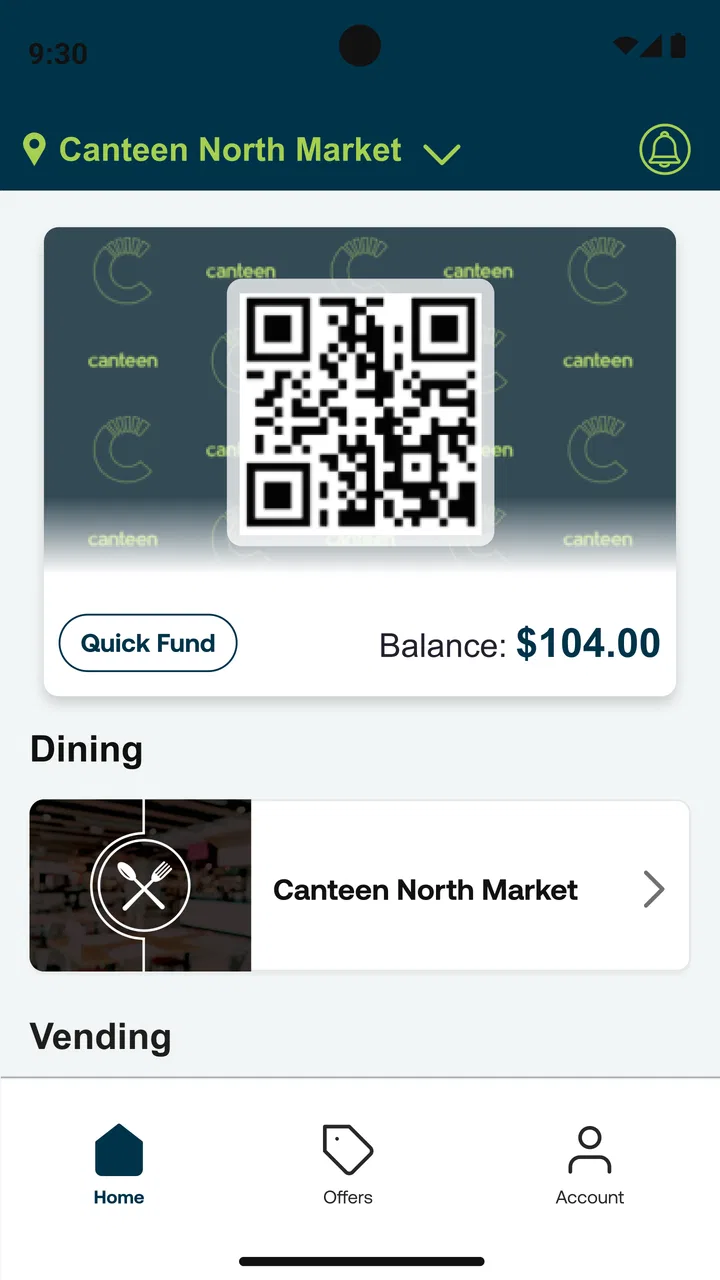
Developed by 365 Retail Markets, this free Food & Drink app is aimed at everyday convenience rather than recipe discovery, restaurant browsing, or meal planning. Its store summary describes it as Canteen’s newer way to make shopping more convenient, and that narrow purpose is important. Connect & Pay works best as a practical bridge between your phone and a participating Canteen purchase, not as a general food app that remains useful in every situation.
What using Connect & Pay feels like over time
Over time, I’d judge Connect & Pay less by the novelty of paying with a phone and more by whether it becomes an effortless part of a familiar Canteen visit. In this section, I’d look at how changing routines, shared spaces, and different ways of using a phone affect that fit. The key question is whether the app stays easy to reach and understand when a quick purchase is only one small part of a busy day.
You May Also Like

 Blood Strike: 2.5 Anniversary
Blood Strike’s Loadouts Turn Every Drop Into a Tactical Gamble
A close look at Blood Strike’s custom loadouts: how fast access to signature weapons reshapes its battle royale rhythm, rewards preparation, and narrows the gap between fights.

 Pandora - Music & Podcasts
Pandora’s Music Is Easy to Start, but Harder to Recover
Pandora’s strength is its low-effort path from a seed to a station. Its weak spot is how much confidence it asks you to place in connection, setup, and quiet recovery.

 8 Ball Pool
 Is Built on Rivalries, Rematches, and Routine
A close look at the rivalries, rematches, shared routines, and unanswered safety questions that turn a quick pool match into a persistent mobile community.

 Samsung Music
’s Quiet Strength Is Playing What You Already Own
Its reach comes less from spectacle than from dependable access to a personal library. That simplicity is both the app’s strongest retention engine and its ceiling.

 AccuWeather: Weather Radar
AccuWeather Review: A Quick, Clear Forecast for Everyday Decisions
For everyday plans, the best forecast is the one you can understand quickly. AccuWeather makes rain timing, radar, and local conditions easy to act on, with a few trade-offs.

 Hill Climb Racing
Why Hill Climb Racing Still Turns Crashes Into One More Run
A tiny car, a bumpy hill and one more upgrade: Hill Climb Racing keeps resurfacing because its simple chaos makes every near-miss feel personal.
More From Our News Desk



The first-week appeal is clear, but depends on your routine
My first impression was that the app makes the most sense when I am already standing near a Canteen and want to avoid unnecessary steps. Instead of treating the phone as a place to browse endless food content, it gives it a focused job: helping connect the shopper with the purchase process. That focus keeps the idea understandable. I do not need to learn a complicated food marketplace or build a profile around dining preferences.
The strongest early use case is a workplace routine. Imagine arriving at a break room between meetings with only a short window to grab a drink and something small to eat. If the Canteen setup around you is compatible, having the payment process associated with the app can feel more convenient than searching for cash or handling a separate payment routine. The benefit is not dramatic, but it is exactly the kind of small improvement that can matter when repeated several times a week.
I also appreciate that the app is free to download. That removes one obvious barrier for someone who wants to test it without committing money first. Its Everyone content rating makes it broadly approachable, including households where a shared device or a younger user may be involved in the purchasing routine, although the actual usefulness still depends on the local Canteen experience rather than the age label alone.
The early learning curve is modest because the concept is narrow. You are not being asked to understand a large catalog of restaurant features. The important question is simply whether Connect & Pay can be used where you intend to shop and whether the payment flow feels quicker than your usual alternative. I would install it shortly before using a participating Canteen, rather than downloading it with no immediate need and expecting it to become useful automatically.
Why the app can feel better than ordinary payment methods
Compared with paying entirely with cash, a phone-based process can reduce the number of physical items I need to carry and handle. Compared with using a bank card directly, the advantage is more situational: the app may make the Canteen interaction feel more connected and purpose-built instead of treating the machine like an isolated vending purchase. That distinction matters most for people who visit the same location repeatedly.
There is also a mental benefit to having one familiar method for a recurring purchase. When a person eats at the same workplace, school, or shared facility, convenience is often about predictability rather than speed alone. A dedicated Canteen payment tool can be worthwhile if it helps make the same action feel consistent each time.
Still, I would not call it automatically better than a card or cash. If your normal payment method is already fast, reliable, and always in your hand, adding an app can create another step rather than remove one. A user who visits Canteen only occasionally may not notice enough improvement to justify changing habits. The first-week appeal is therefore strongest for repeat shoppers, not curious downloaders looking for a broad food companion.
Small workflow choices that make the trial more useful
One practical tip is to test the app during a low-pressure purchase instead of waiting until you are in a hurry. That gives you time to understand how the Canteen and phone work together without holding up a line or abandoning the purchase. A calm first test also makes it easier to decide whether the app is genuinely smoother than your existing method.
I would keep a backup payment option available during the first few visits. This is not a criticism unique to Connect & Pay; any phone-dependent payment routine can become inconvenient if the device is unavailable or the process does not behave as expected in a particular setting. The useful trade-off is simple: use the app when it saves effort, but do not turn a quick snack into a technology problem by carrying no alternative.
Another worthwhile habit is to judge it by the complete transaction, not just the opening screen. An app can look straightforward while the real experience depends on moving from the phone to the Canteen and finishing the payment without confusion. I found that the most important test is whether I can complete the purchase naturally while distracted, carrying other items, or working under a short break. That is where convenience either becomes real or disappears.
Month-to-month value comes from repetition
After the novelty fades, Connect & Pay has to earn its place through repeated use. This is where I think the app has a sensible but limited proposition. It is not trying to entertain me between purchases. Its long-term value comes from reducing friction in a routine that already exists. If I regularly buy from a compatible Canteen, the app can become a quiet utility: something I open because it belongs to the process, not because I want to explore it.
That kind of value is easy to underestimate. A few seconds saved, fewer payment items to manage, and a familiar sequence can add up over many workdays. The app does not need to transform lunch to be worthwhile. It only needs to remain more convenient than the alternative often enough that I stop thinking about the choice.
On the other hand, a routine app has a high standard to meet. If it is only useful in one building or during one narrow part of my day, I may forget it exists when I change locations or alter my schedule. Unlike a general wallet, Connect & Pay is tied closely to the Canteen context. That specialization can make it clearer to use, but it also limits how often it can provide value.
The public response suggests that many people find the idea worthwhile: the app holds a 4.5 average from around 5.7 thousand ratings, with roughly 891 written reviews and more than 500 thousand installs. Those figures make it look established enough to take seriously, but they do not guarantee that it will fit every Canteen location or personal payment habit. I would treat the popularity as encouragement to try it, not as a substitute for checking whether it helps in my own routine.
What keeps it useful after the novelty disappears
The best long-term strategy is to connect the app to a specific recurring moment. For example, I might use it whenever I buy a mid-morning drink at work, rather than trying to remember it for every possible food purchase. A fixed trigger makes the app easier to remember and gives me a fair basis for comparison with cash or direct card payment.
I would also avoid installing it simply because it is free. Free apps can still create clutter, notifications, or unused shortcuts that make a phone harder to manage. Connect & Pay deserves permanent space only if it supports a real Canteen habit. If I stop visiting that location, the reason to keep it becomes much weaker.
The current version is 20.2602.0, and the minimum operating-system requirement is Android 8.1. For someone using an older device, compatibility should be considered before planning around the app. For most users with a reasonably current phone, the more meaningful question is not technical age but whether the device is dependable during the times they buy food. A payment tool that is installed but rarely charged, available, or convenient will not deliver lasting value.
Maintenance is light, but not completely invisible
Connect & Pay is not the kind of app I expect to maintain every day. Once it is set up and integrated into a regular Canteen routine, the ongoing burden should mainly be remembering to keep the phone ready and noticing when the app needs attention. That is lighter than managing a full food-ordering service, but it is still more responsibility than handing over cash.
The biggest maintenance issue is habit continuity. If I change phones, stop visiting the same Canteen, or begin using another payment method, the app can quickly become irrelevant. A general banking or wallet app usually survives those changes because it serves many purchases. This one earns its place through a specific environment, so its usefulness should be reviewed whenever my daily routine changes.
I would also make sure the app is not competing with a simpler method. If I can pay directly at the same Canteen with a card in one motion, using Connect & Pay may not reduce effort. The app is worth maintaining when it provides a clear connection to the Canteen process, not merely because a dedicated app feels more modern.
That distinction is especially important for people who share devices, have limited storage, or prefer to keep their phones free of single-purpose tools. A free download does not remove the cost of attention. Every additional app asks me to remember what it does, keep it available, and decide when to use it. Connect & Pay passes that test for frequent Canteen shoppers more easily than it does for occasional users.
Where fatigue can begin
The first source of fatigue is repetition without enough payoff. If every visit still feels just as easy with cash or a bank card, the app may start to feel like an extra layer. Convenience products are judged harshly because their purpose is to remove friction; even a small interruption becomes noticeable when it appears during a rushed break.
A second issue is context switching. I may begin with the intention of using the app, then discover that I need to handle the Canteen, my phone, and another payment option at the same time. When I am carrying a drink, talking with a colleague, or trying to return to work, the ideal experience is almost invisible. If the phone becomes another object to manage, the advantage narrows.
There is also a risk of overestimating what a specialized payment app can replace. Connect & Pay is not a universal wallet, a restaurant guide, a grocery planner, or a complete meal-ordering platform. Someone looking for broad food discovery or one payment tool for every kind of purchase would probably be better served by a general wallet or a wider food service. Choosing the right category matters more than chasing the newest option.
Another realistic limitation is location dependence. The app’s value is tied to the Canteen environment, so a person who works remotely, travels between sites, or rarely encounters a compatible setup may not develop enough repetition for the habit to stick. In that situation, the app may be perfectly reasonable but still not useful enough to remain installed.
Who should make room for it
I would recommend trying Connect & Pay if you buy from Canteen regularly and want a dedicated way to make those purchases more convenient. It is particularly suitable for someone who dislikes carrying cash, prefers using a phone for routine transactions, or wants to standardize a repeated workplace food purchase. The free price also makes a short trial easy to justify.
I would be more cautious if I already have a direct card payment that feels effortless. In that case, compare the complete experience rather than assuming the app must be faster. People who only visit Canteen once in a while should also think twice. A specialized tool can be useful without being useful often enough to deserve a permanent place on the phone.
It may also be the wrong choice for anyone seeking a broader food experience. If I want menus from many restaurants, delivery coordination, nutrition tracking, or grocery planning, this app is too focused. Its strength is the same thing that limits it: it concentrates on the Canteen purchase instead of trying to cover every food-related need.
My long-term verdict
Connect & Pay earns lasting space when it becomes part of a repeated Canteen habit, not when it is judged as a flashy new download. I like its focused purpose, free access, approachable presentation, and potential to simplify a small but recurring payment task. The app feels most convincing when I use it several times in the same environment and stop needing to think about the process.
My reservation is equally straightforward: its value is narrow and situational. A general wallet may be better for someone who wants one payment method across many places, while cash or a bank card may remain simpler for occasional Canteen visits. Connect & Pay is not a replacement for every alternative, and treating it that way would create unnecessary friction.
Overall, I would keep it installed if Canteen is part of my weekly routine and the app makes those purchases feel more predictable. I would remove it if my visits became rare or if direct payment proved just as easy. The lasting recommendation is conditional but positive: use Connect & Pay as a dependable Canteen utility, not as a general-purpose food app. For that audience, Connect & Pay has enough recurring value to outlast its first-week novelty.
FAQs for Connect & Pay
01What is Connect & Pay, and how does it work?
Connect & Pay is a mobile application designed for seamless digital transactions and bill payments. It allows users to link their bank accounts, credit cards, or digital wallets to the app for quick payments. Users can pay utility bills, transfer money, and even shop online with just a few taps. The app ensures secure transactions with encryption and multi-factor authentication.
02Is Connect & Pay safe to use for online transactions?
Yes, Connect & Pay is designed with robust security features to protect user data and transactions. The app employs encryption technology and two-factor authentication to safeguard your financial information. Additionally, it adheres to international security standards and regularly updates its systems to counter any potential threats, ensuring a secure user experience.
03Can I use Connect & Pay internationally?
Connect & Pay supports international transactions, allowing users to make payments and transfers across borders. However, the availability of certain features may depend on your region and the financial institutions connected to the app. It's advisable to check the app’s regional support and any applicable fees for international transactions before proceeding.
04What are the system requirements for installing Connect & Pay?
To install Connect & Pay, you need a smartphone running Android 8.0 or iOS 12.0 and above. Ensure you have a stable internet connection for seamless functionality. The app requires minimal storage space but may need additional room for updates. It's essential to keep your device updated to the latest OS version for optimal performance.
05Are there any fees associated with using Connect & Pay?
Connect & Pay itself does not charge any fees for basic transactions like bill payments or money transfers. However, certain transactions, especially international ones, might incur fees from your bank or payment provider. It's important to review the terms and conditions and consult your financial institution for any additional charges that may apply.
Pros
- Seamless integration with multiple banks.
- User-friendly interface with intuitive navigation.
- Real-time transaction alerts for security.
- Supports multiple currencies for global use.
- Quick setup with minimal personal information.
Cons
- Limited customer support hours.
- Occasional lag during high traffic.
- Some features require premium subscription.
- Limited offline functionality.
- No dark mode option available.

Connect & Pay
Gallery